
History of the Association of Polish Stage Artists
The Association of Polish Stage Artists was founded by actors on December 21, 1918, shortly after Poland regained independence, during the nationwide Constitutional Congress held at the Teatr Rozmaitości in Warsaw. The congress was opened by Józef Śliwicki, and the distinguished actor Wincenty Rapacki was appointed honorary chairman of the assembly. Stefan Jaracz and Franciszek Frączkowski read the full text of the Statute, which had been prepared during the war by a special committee consisting of: Stefan Jaracz, Jan Kochanowicz, Juliusz Osterwa, Józef Śliwicki, Aleksander Zelwerowicz, Franciszek Frączkowski, Józef Mikulski, Józef Munclingr, Mieczysław Szpakiewicz, and Ludwik Śliwiński.
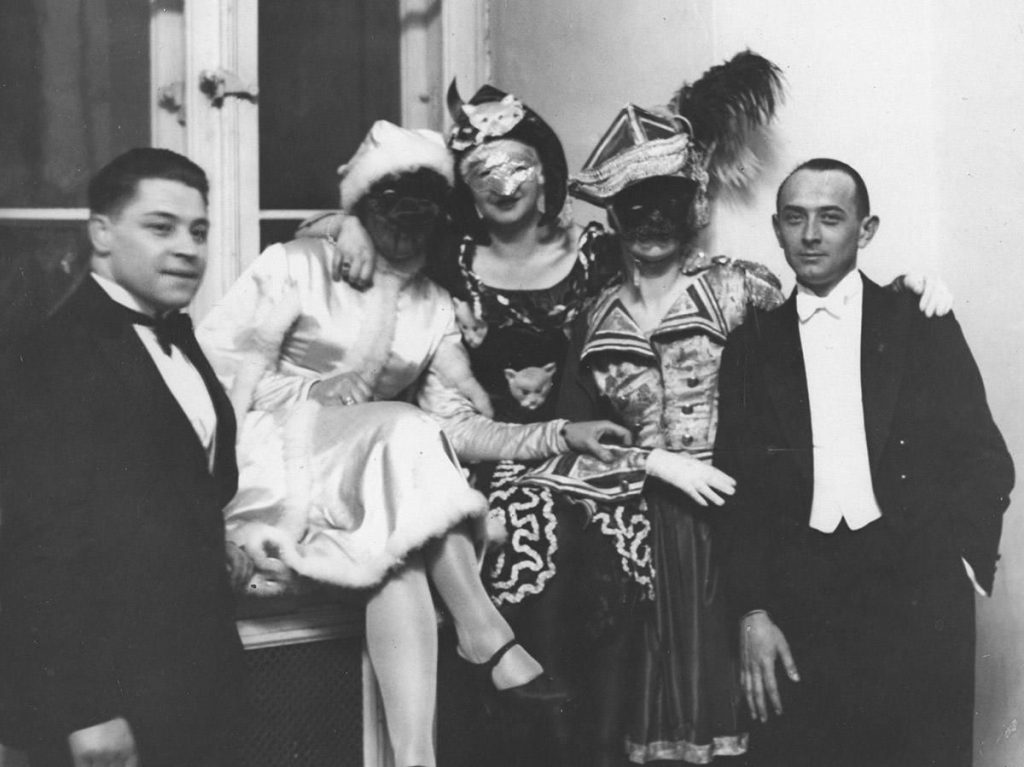
During the Second Polish Republic, ZASP was a strong and effective organization. From the very beginning, it assumed the role of the main organizer of theatrical life. In broad terms, it regulated the rights and duties of actors in the theatre, established the legal relations between the actor and the theatre (work regulations), and between the theatre and the Association (conventions). It approved various forms of financial assistance, such as funeral and jubilee funds. It launched the union’s journal Scena Polska, contributed to the founding of the Polish Institute of Theatre Studies in 1925, and to the establishment of the State Institute of Theatre Arts (PIST) in 1932. In 1936, it convened perhaps the most important congress in its history, devoted entirely to artistic matters. Also in 1936, it oversaw the completion of the monument to Wojciech Bogusławski in front of the National Theatre.
Since 1922, external examinations for actors were held at ZASP, and from 1923 also for directors. In 1976, the Association of Polish Stage Artists became a member of FIA (International Federation of Actors), an international organization bringing together actors’ unions from around the world.
Three important achievements of ZASP in the interwar period deserve special recognition: professional training for actors, which after the years of partitions helped unify stage pronunciation; the introduction of organizational compulsion, meaning the necessity and obligation to belong to one and only one association – only a ZASP member who had signed a convention with the Association could perform in a theatre, and theatres that had signed the convention could employ only ZASP members; and the negotiation of annual contracts guaranteeing actors a minimum salary.
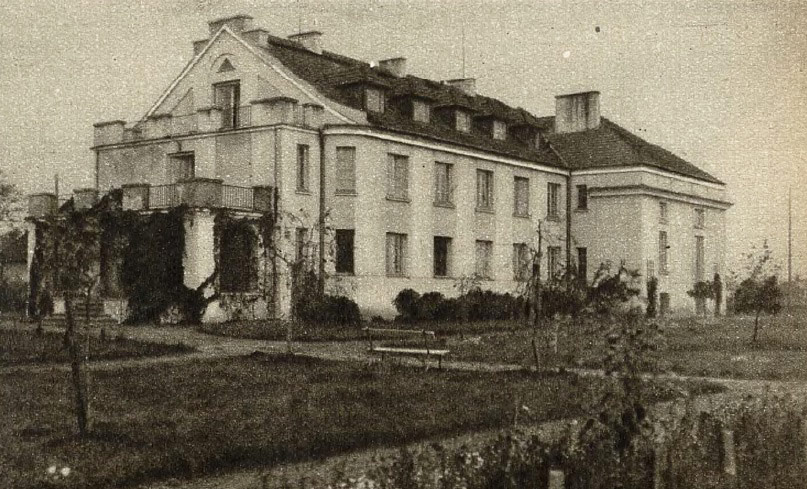
Among the lasting accomplishments of this time were also the retirement home in Skolimów (see: Skolimów) and the Actor’s House in Warsaw. The idea of building the Actor’s House in the capital arose in 1921. In 1928, a plot at 48 Polna Street was purchased, with plans to construct a modern building. However, in the mid-1930s the plot was sold and an old house at 45 Ujazdowskie Avenue was acquired instead. Partially destroyed during the war, since 1949 it has served as the permanent seat of the ZASP Main Board.
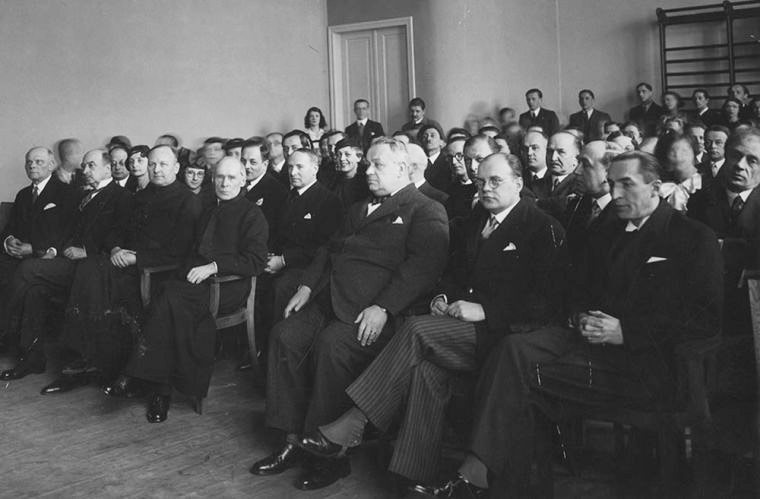
During the war, ZASP operated underground. It oversaw the training of actors in lecturers’ private apartments and initiated the establishment of the Secret Theatre Council, founded in 1940 at the initiative of Bohdan Korzeniewski, Leon Schiller, and Edmund Wierciński. The Council, among other things, prepared plans for organizing theatres in a free Poland and drafted a project for verifying actors who had broken the ban on performing in events licensed by the Germans, a ban adopted by ZASP in 1940.
After the war, ZASP changed its name several times. In 1950, it was replaced by SPATiF (Association of Polish Theatre and Film Artists). In 1957, after the Polish October, the Association’s name was extended, and ZASP was added to SPATiF. In the memorable year of 1981, an Extraordinary Congress resolved to restore the pre-war name. On December 13, 1981, martial law was introduced. On December 1, 1982, ZASP was dissolved, and on December 19, 1983, the founding congress of the “new” ZASP took place, with about 1,300 people joining. The former ZASP had around 5,000 members.
At the beginning of 1989, a constructive agreement was reached between the two ZASPs, and at the end of October an Extraordinary Congress was convened, uniting the community.
In April 2014, during the 56th General Congress of ZASP Delegates, the name was approved as: ZASP – Association of Polish Theatre, Film, Radio and Television Artists. On April 1, 2019, during the 59th Extraordinary General Congress, convened to approve a new Statute, the Association’s name was changed once again and now reads: Association of Polish Stage Artists ZASP.