PBI: Directing such a serious institution as ZASP probably requires a complete reset: a change of mindset and shifting attention to something entirely different – what do you do after working hours?
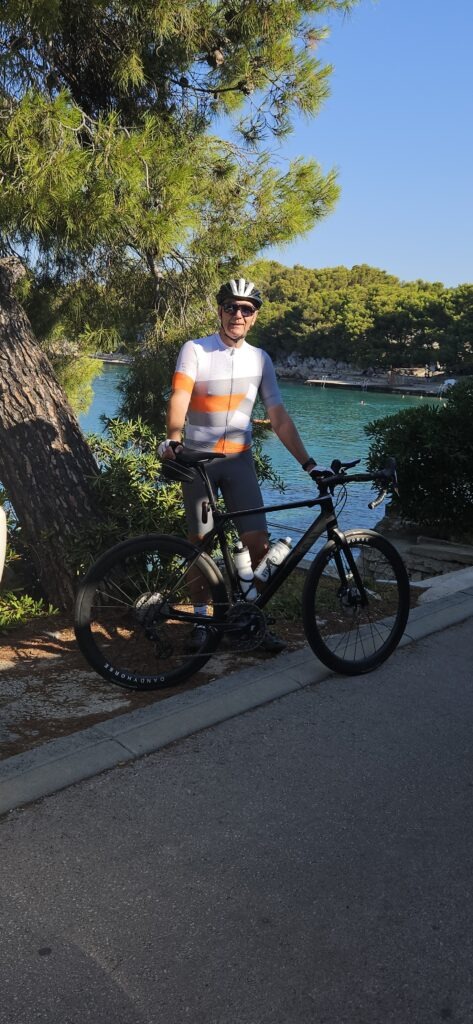
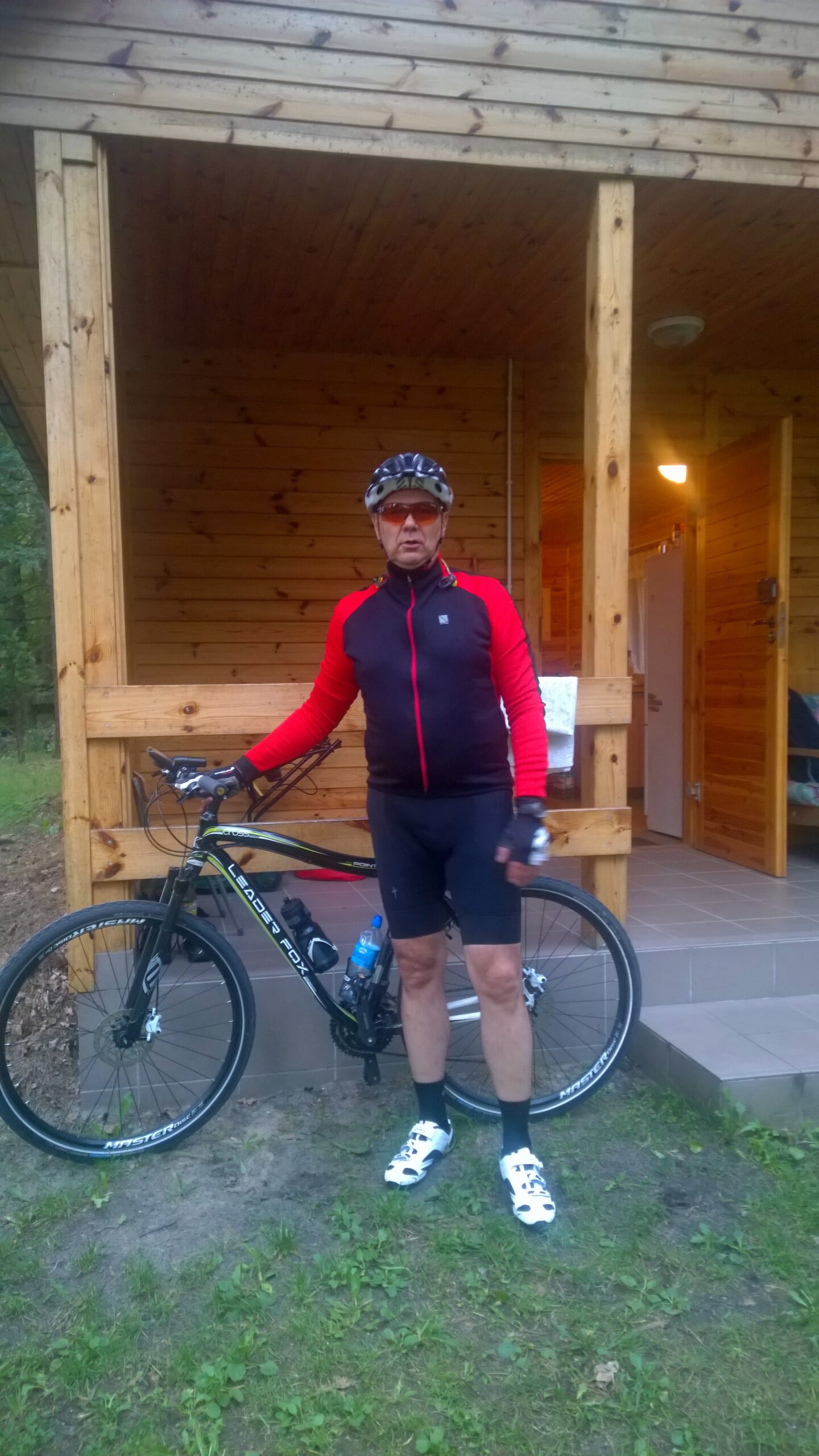
AG: My escape is the bicycle. And it’s not just recreational activity, but – as I would call it – “ambitious” at an amateur level. On my road bike I ride between 100 and 200 kilometres at a time. This is my way to clear my head; around 100 kilometres is roughly four hours of riding – enough time to reset and return to everyday matters and problems with a new perspective.
PIB: But I assume those 100 kilometres are not your daily routine: you leave your office, get on your bike…
AG: In summer it happens – the day is longer, you can afford it. When there’s less time, I do 50–60 kilometres, but at a faster pace so it’s a real effort – so that I get properly tired. In winter, my regular bike is replaced by a trainer – a static device into which the road bike is mounted, and the whole setup is connected to an app that simulates natural riding conditions. The route is displayed on the screen in front of me, and the riding difficulty adapts to it.
PIB: And the immediate question is: what does your wife think of this? You finish work and start training; you’re never home…
AG: My wife is used to it now; she thinks it’s a sensible hobby, good for one’s health. And here we come to the moment when I decided to start my cycling journey: I was in hospital before a serious operation and promised myself that if I survived it, I would change something in my life and start road cycling. Doctors predicted I would return to activity after six months, and after three months I rode my first 20 kilometres.
PIB: On a road bike?
AG: No, no – that was my favourite “touring bike”, which I now use for rides with my wife.
PIB: I have a feeling there are more bikes…
AG: Yes, the “touring bike” is just an ordinary bike. After some time I bought a gravel bike. I now use it mainly in winter. So: I have a road bike, a gravel bike, a touring bike, another bike sitting in the trainer, and a fifth one – my city bike.
PIB: Each one completely different?
AG: Yes, because each serves a different purpose; I come to ZASP on the city bike – a beautiful 40-year-old Italian machine.
PIB: Do you ride in the streets?
AG: I’m a car driver too, so I respect both groups of road users. My rule is: where there are bike lanes, you should use them. Where there are none, I ride on the street – the law requires it. I don’t ride on pavements, because it’s dangerous and against the rules.
PIB: Do you read specialist literature? Have you taken any cycling courses? Training? Such a varied set of equipment must require different ways of using it?
AG: I must admit I’m a gadget lover. And of course I tried to learn as much as possible about each of my bikes. There were books too, but now most can be learned from the internet. I still subscribe to a dozen or so blogs in this field, although I’m no longer uncritical. Because my initial trust in everything I read cost me a small fortune in gadgets I didn’t really need. But my Canyon (road bike) is now heavily modified compared to the basic version I bought. Everything is fitted to me, including a full bike fitting – adjusting the bike setup to the cyclist’s physiology and individual needs. This is done by trained physiotherapists. After the surgery, only the frame remains unchanged.
And here’s a fun fact – I don’t know if you know that in “ambitious” cycling the shoes clip into the pedals, like in skiing.
PIB: And what if you fall?
AG: They should unclip just like skis. I’ll admit I fell a few times when learning to ride with clipped-in shoes – at first I would simply forget. That moment when you stop at a traffic light and realise you can’t put your foot down… It was funny.
PIB: That sounds dangerous?
AG: Not as much as it seems. I’ve fallen more often riding my gravel bike in the forest – that’s much harder. But I’ve never been hurt.
PIB: Do your bikes have their own “clinic”? Do you take all repairs to one place?
AG: Not quite, but I do have my favourite long-established service point: in Koło, in Warsaw’s Wola district, there’s a bike shop formerly run by the unforgettable Ryszard Szurkowski. I started servicing my bikes there when he was still alive; we talked about cycling several times and I remember those conversations to this day. The shop staff is still the same, so I trust them completely with anything I can’t fix myself. Because I do most of the work on my bikes on my own – and sometimes they have to rescue the bike after my attempts…
PIB: Are you a devoted follower of the Tour de France and other races?
AG: Not really, only occasionally – I’m not a fan of watching hours of cycling, I’d rather go for a ride myself. This is a sport to practise, not to watch. I only watch the finishes, because that’s where a lot happens in the peloton – and since I started cycling myself, I understand and notice much more.
But this is a sport you can practise in many ways. I, for example, practise what I call “romantic cycling”: I ride alone, at my own pace, for as long as I want, and wherever I want.
Some people ride road bikes for racing – they ride in pelotons. Others don’t race but like cycling in groups and go on rides with friends. That’s a completely different sport.
I don’t like riding in groups, because it requires adapting to others’ pace, great alertness not to fall and not to bring others down – because it’s like dominoes.
I prefer riding alone, listening to music…
PIB: You ride with headphones?! Is that safe?
AG: Yes, but they’re open headphones that don’t block outside sounds. I listen to podcasts about cycling, nutrition, health…
PIB: You take a holistic approach.
AG: Yes! It’s a whole system that interests me. Diet is important – what I should follow; the set of exercises I need to do so the whole body is prepared for riding. To stay healthy – riding engages mainly the legs, while the rest of the body stays in an awkward position for hours.
My first ride on a road bike, where your head is sometimes lower than the saddle, was a great effort. So exercises, nutrition adjusted to different factors – all that is important. I read a lot about it and incorporate it into my life.
PIB: Let’s go back to your wife, who not only appreciates that you practise sport, but also joins you sometimes.
AG: We actually met as athletes. We studied at the same university (SGPiS in Warsaw), in different departments, so we didn’t know each other. But we were both members of the university volleyball teams at the Academic Championships in Katowice, and that’s where we met. That was our sporty beginning and sport has accompanied us all our lives. Of course, we also ride bikes together. That’s why I have the “touring bike”. But my wife treats it purely recreationally – for example, she believes that you don’t ride a bike in winter, only in summer. She stays far away from the trainer.
PIB: Please tell me about the most beautiful route you have ever cycled. I know you ride not only in Poland…
AG: Our favourite holiday spot is Croatia; we drive there by car, but my road bike comes with us. In Poland we often go to our cottage in Mazury – sometimes here, sometimes there. In Croatia it’s hard to do a really long route due to the climate; when I start at 6 a.m., I try to return before 9 to escape the heat. And I have this lovely 40-kilometre route – lots of hills, leading to a drawbridge, behind which there is a fishing village with a charming little port; I sit at a table, order a coffee and look out at the sea. And then I return. I love this almost-daily ride. Sometimes I take a slightly different route – along the sea – riding slower but with beautiful views the whole time.
And the routes in Mazury are wonderful too.
PIB: Thank you for the conversation – and I wish you many beautiful cycling paths ahead.
Interview by
Paulina Iwińska-Biernawska